


Masterpieces Of Furniture
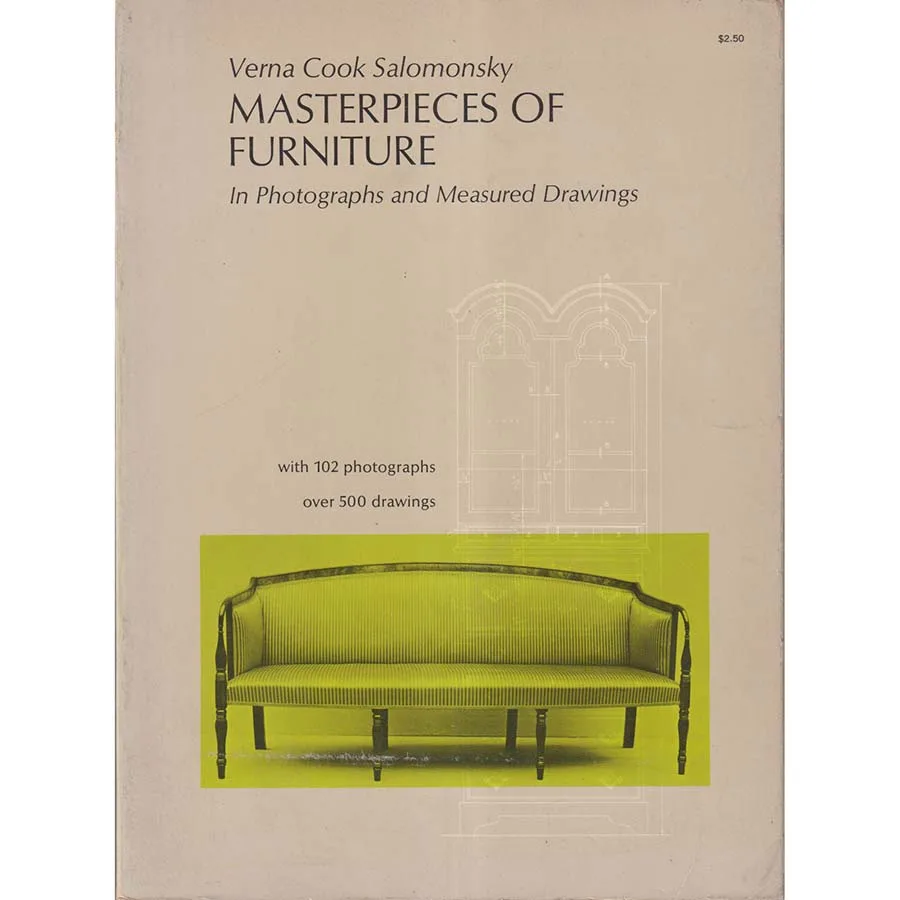
Publisher: Dover
Format: Paperback
ISBN: none
Masterpieces of Furniture by Verna Cook Salomonsky, published by Dover in 1953, is a handsome old study of furniture from the era when chairs were expected to last for generations, tables were built from actual wood, and nobody had yet suggested that a shelving unit should arrive flat in a cardboard box with one screw mysteriously left over.
This is furniture treated as design, craft and history rather than simply something to prevent people sitting on the floor.
Salomonsky’s book looks at important examples of furniture and the traditions behind them, examining the forms, proportions, construction and decorative details that turned ordinary domestic objects into things collectors, architects and historians were prepared to discuss with tremendous seriousness.
And quite right too.
A chair may seem a simple idea until somebody begins designing one.
Then suddenly there are questions of proportion, joinery, timber, upholstery, balance, ornament and whether the legs should curve, taper, twist, terminate in claws, or simply stand there behaving themselves.
Furniture history is full of this sort of thing.
Cabinets become architectural statements.
Tables acquire identities.
Chairs develop personalities.
And wardrobes grow large enough to suggest that previous generations possessed either enormous amounts of clothing or considerable anxiety about storage.
The great pleasure of a book like Masterpieces of Furniture is that it forces you to look properly at objects normally taken for granted.
A well-made piece of furniture can tell you an enormous amount about the period that produced it: what materials were available, what craftsmanship was valued, how people lived, how wealthy they wanted to appear and how much unnecessary carving they considered socially acceptable.
The answer to the last question was sometimes “quite a lot”.
This is especially true of historical furniture, where practicality and status often worked together.
A chair was somewhere to sit.
It could also be an announcement that the owner had money, taste, servants and absolutely no intention of buying anything made of chipboard.
Published by Dover, this volume belongs to that excellent tradition of serious but affordable art and design books intended for students, collectors, craftsmen and people who simply liked knowing how things were made.
Dover had the useful habit of keeping specialist subjects available without making the books themselves cost as much as the objects being illustrated.
The 1953 publication date gives the book an additional layer of period charm.
Post-war design was moving rapidly toward modernism, new materials and mass production, yet interest in historical craftsmanship remained strong. This was a moment when traditional furniture could be studied not merely as something old-fashioned, but as a body of design knowledge worth preserving.
Which, in retrospect, was sensible.
Once enough Victorian wardrobes had been chopped up, Georgian chairs stripped, and old cabinets painted beige, people eventually remembered that perhaps the originals had been rather good.
For furniture makers, designers, restorers, antique enthusiasts, architectural historians and collectors of decorative arts books, this is the sort of volume that can be both useful and quietly dangerous.
Useful because it teaches you to recognise good design.
Dangerous because afterwards you may begin inspecting the joints underneath other people’s tables.
There is also something reassuring about the word masterpiece being applied to furniture.
Modern retail has become so enthusiastic about phrases like “statement piece” and “designer-inspired” that it is pleasant to return to an age when greatness generally required rather more than attaching brass-coloured handles to MDF.
Condition: Good. A sound vintage copy with normal signs of age and handling. Published in 1953, it has now survived long enough to qualify as an antique-adjacent object itself, although fortunately it takes up rather less room than an eighteenth-century breakfront bookcase.
No ISBN stated.
A fascinating old design volume for anyone interested in antique furniture, craftsmanship, interiors, decorative arts or the long human tradition of making somewhere to sit far more complicated than strictly necessary.
Sold by Crappy Old Books — where the furniture is magnificent, the books are affordable, and nothing requires an Allen key.
Keep browsing: See more Antiques books Other books by Verna Cook Salomonsky
